

Early 20th Century French Louis-Philippe Revival Mahogany Vitrine Bookcase
A tall glazed bookcase in Louis-Philippe revival taste, where warm mahogany and softened mouldings create a quiet architecture for books and objects.

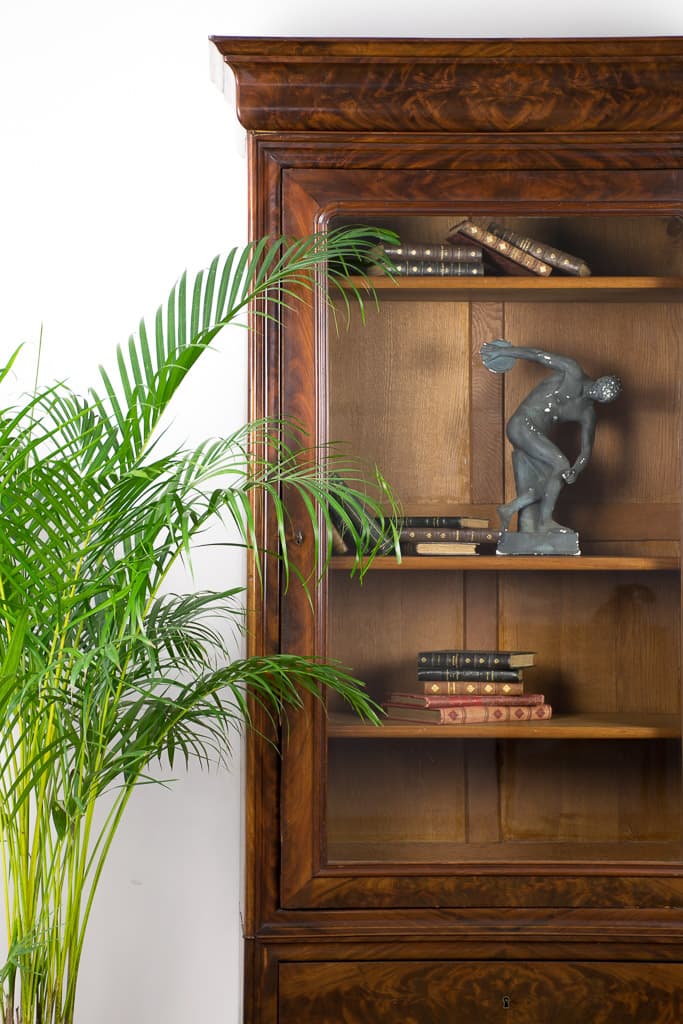
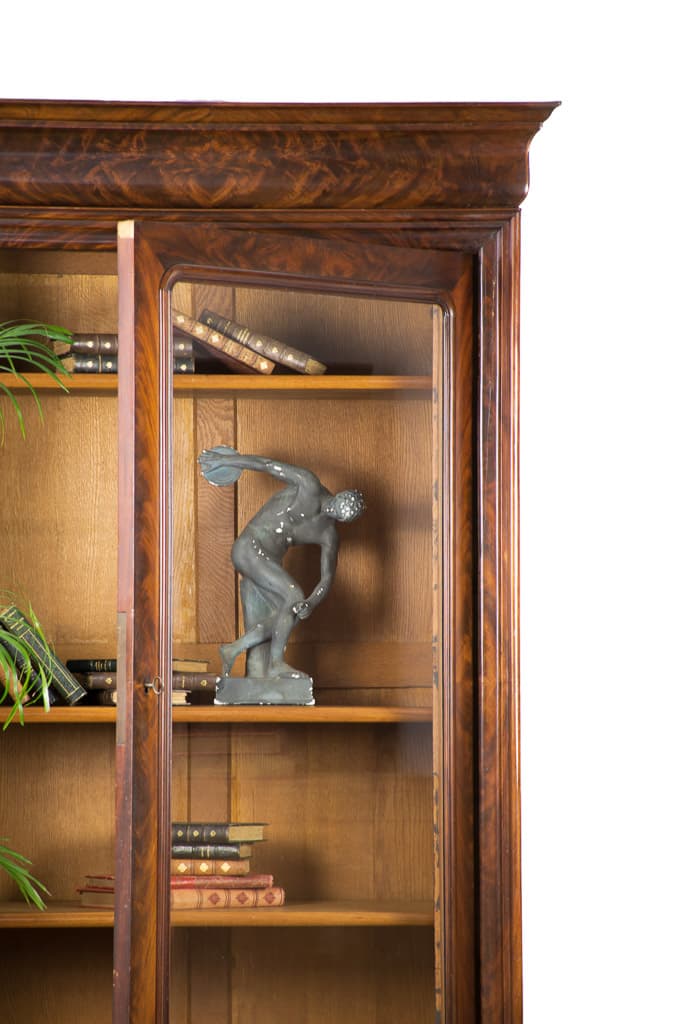
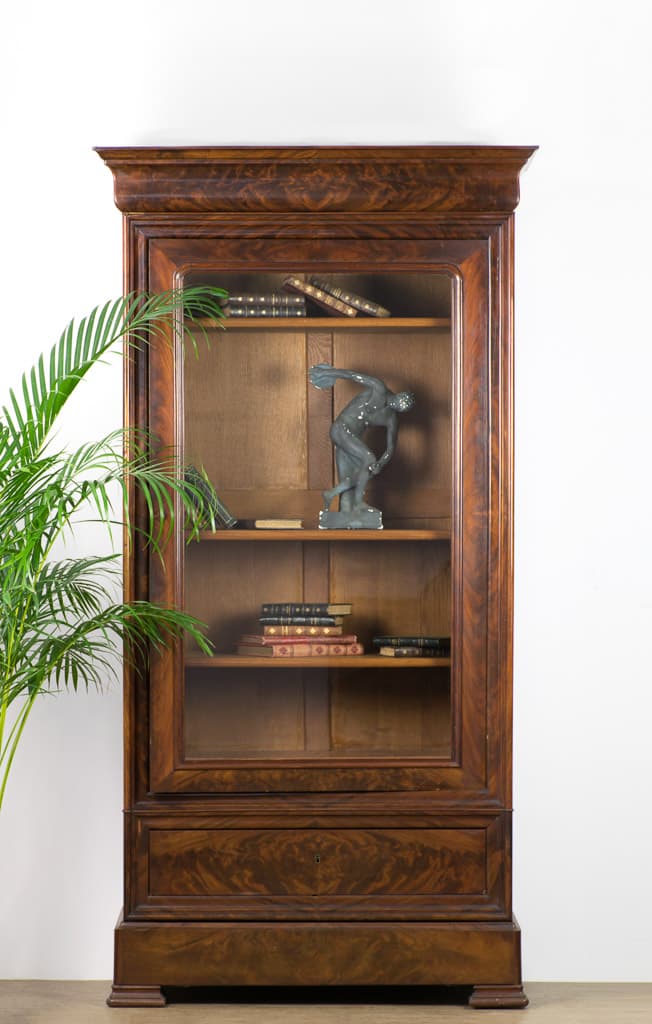
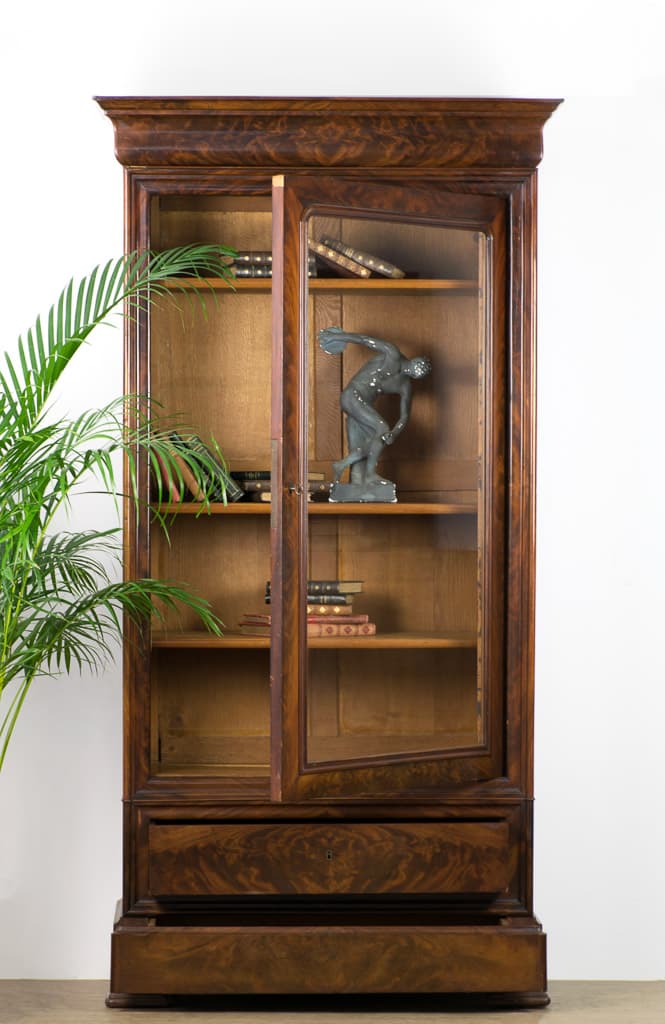
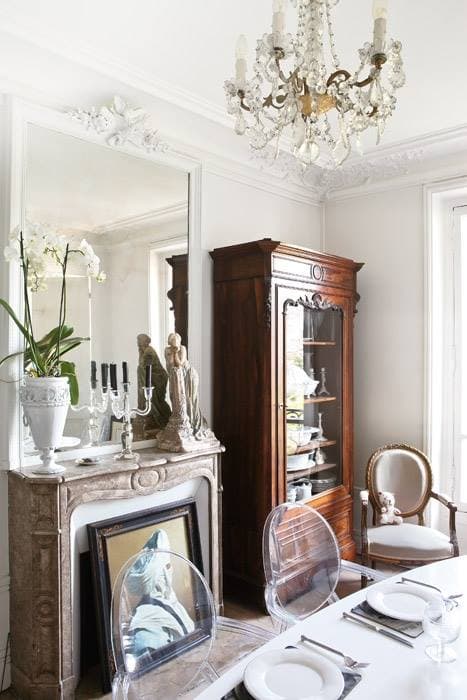
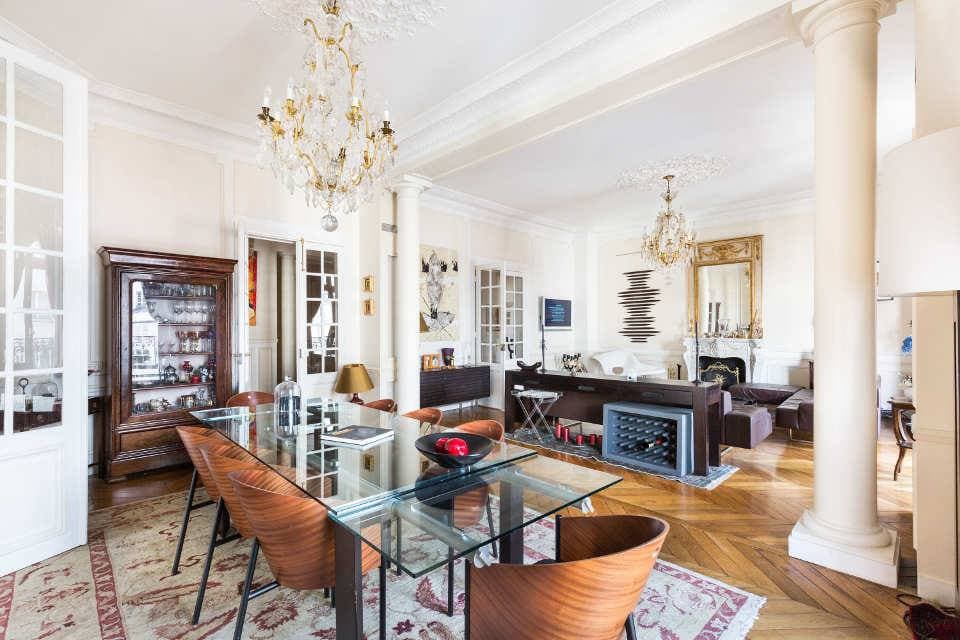
With its tall, assured silhouette and softened contours, this French bookcase is designed in the spirit of the Louis-Philippe period, here interpreted as a revival form that favours proportion and material over ornament. A broad cornice and carefully profiled frame lend architectural definition, while the glazed door presents the interior with a restrained clarity. The profile—rounded inner corners, calm mouldings, and a grounded plinth—reflects the Louis-Philippe taste for measured elegance. Rather than relying on carving, the piece draws its character from the natural movement of the wood grain, creating a surface that reads as both classical and warmly domestic. Constructed in mahogany with secondary woods, and fitted with glass to the door, it offers practical display and protection for books, ceramics, or small sculptures. The lower section, articulated with a keyhole detail, adds visual weight and suggests useful enclosed storage within the overall composition. In a contemporary interior, it settles naturally into a study, library corner, or living space—pair it with linen, stone, and matte ceramics for contrast, or place it beside modern seating to let its gentle Louis-Philippe curvature soften a cleaner architectural room.


法國路易-菲利普古董書櫃
With its tall, assured silhouette and softened contours, this French bookcase is designed in the spirit of the Louis-Philippe period, here interpreted as a revival form that favours proportion and material over ornament. A broad cornice and carefully profiled frame lend architectural definition, while the glazed door presents the interior with a restrained clarity. The profile—rounded inner corners, calm mouldings, and a grounded plinth—reflects the Louis-Philippe taste for measured elegance. Rather than relying on carving, the piece draws its character from the natural movement of the wood grain, creating a surface that reads as both classical and warmly domestic. Constructed in mahogany with secondary woods, and fitted with glass to the door, it offers practical display and protection for books, ceramics, or small sculptures. The lower section, articulated with a keyhole detail, adds visual weight and suggests useful enclosed storage within the overall composition. In a contemporary interior, it settles naturally into a study, library corner, or living space—pair it with linen, stone, and matte ceramics for contrast, or place it beside modern seating to let its gentle Louis-Philippe curvature soften a cleaner architectural room.